
blog - What About Bob
Category: What About Bob
Say “Hello” to OxyGo FIT
What about bob We at OxyGo® have an exciting new product that is going to take the portable POC market by storm. Say hello to the new OxyGo FIT™; our newest, extremely lightweight portable 3 setting concentrator. We named our newest POC the OxyGo FIT because it is going to “fit” into just about all of your oxygen patients' lifestyles. It weighs just 2.8 pounds and has 3 settings. Like our new 5 setting OxyGo, it delivers 210 ml of oxygen per setting. So your patients will be receiving 210 ml, 420 ml, and 630 ml of oxygen at settings 1, 2, and 3 respectively. And just like its big brother, the OxyGo FIT is well constructed and will operate for 2.7 hours on a setting of 2 using the standard battery. The OxyGo FIT does have an optional larger battery, which will power the OxyGo FIT for 5 hours and adds just 0.5 pounds, making the total POC weight only 3.3 lbs. Either battery can be changed in seconds. Most of your patients will be able to replace the battery themselves, thus eliminating in-service calls. The same goes for the sieve beds. When the sieve beds need replacement, just move the retainer mechanism and pull the handle to slide the sieve beds out. Please note: No other company talks about replacing sieve beds because it can't be done in the patient's living room. You have to send the POC back to the manufacturer where it could take weeks and usually big dollars before that unit back is back in service again. Suddenly, you realize that paying for that inexpensive
Oxygen 101: The Road To Safety
WHAT ABOUT BOB? Oxygen safety should never be taken for granted. If you are in the business of delivering oxygen to patients, it is a good idea to frequently review what you are actually doing on a day to day basis compared to what is written in your procedures manual. Simple omissions and mistakes made in the rush of business can have catastrophic consequences. During my career I lost two patients (separate incidents) because they both were smoking cigarettes while on oxygen. The first patient actually was in his living room with his wife and visitors. He was a retired plumber and was very familiar with oxygen and its properties. He chose to smoke with his nasal cannula in place, something that he had done many times previously. But luck only lasts so long. The witnesses stated all they could remember was seeing flames coming from his mouth and nose. (Those of you who have had the required oxygen training may say, "But Bob, oxygen isn't flammable!", which is true. However, in an oxygen enriched environment, a tiny spark can make anything burn. In this case, it was the patient's soft tissues—like his lungs.) My second patient lived in an old wooden 4-plex. He had a roommate, who on this particular day, was on his way to the store. As the roommate was walking out the door, he shouted out a clear warning: “Do not smoke while on your oxygen”. Moments later, the apartment was ablaze. I was on my way to work that morning and heard on the radio that a man had died in an apar
What About Bob?
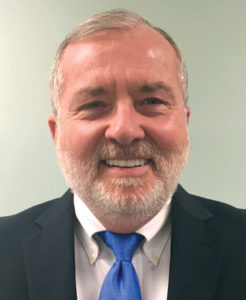
“What About Bob” is Home HealthCare Today’s new column, featuring news you can use from Bob McQuown, a seasoned RT. It will feature news stories, products, reader questions and info, all from the perspective of a fellow Home Healthcare Warrior. Dear Fellow Homecare Colleagues, My name is Bob McQuown and I am the Manager of Clinical Resources for Applied Home Healthcare Equipment located in Westlake, Ohio. In future issues of Home HealthCare Today, I would like to see this space used as an informational platform. It will feature some of our product lines, and areas of interest as to what is happening in the Homecare industry. I would also like to give you the opportunity to voice your opinions on key industry topics or maybe you would like to pass on a success story that could benefit others. The goal is to provide you with a format that will be useful to you. A little about me: After 42 years in Respiratory Therapy, I recently retired from the Cleveland Clinic, where 10 years ago, I started a Durable Medical Respiratory company. This was a respiratory only business. Oxygen, aerosols, CPAP devices, suction machines, and cough assist devices made up the majority of the business. We did not do hospital beds or bent metal. We started with approximately 200 patients. In our first month of business, we received 44 new referrals. Ten years later, the patient count had grown to 16,327 active patients. We were growing at a rate of 350 to 400 new patients p
